

Research News
-
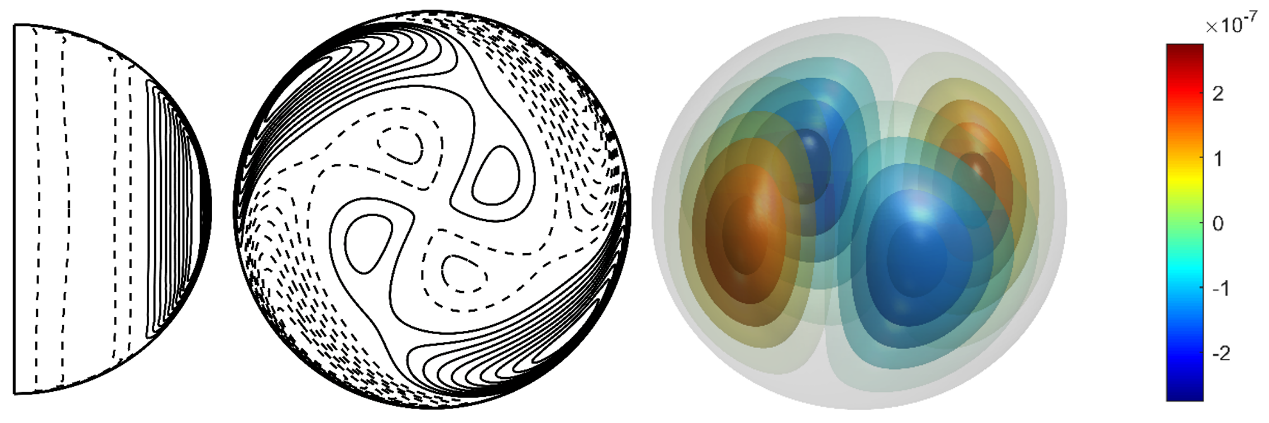 Scientists Tackled the Problem of Thermal Instabilities in Rotationally Flattened Fluid SpheroidsRecently, researchers led by Dr. KONG Dali and Ph.D. student LI Wenbo from the Shanghai Astronomical Observatory (SHAO) of the Chinese Academy of Sciences (CAS) carried out linear onset analysis for thermal inertial convection in oblate spheroidal cavities, elucidating how thermal convection takes place in extremely rapidly rotating planets or stars such as Jupiter, Saturn, and α Eri, etc.Nov 01, 2022
-
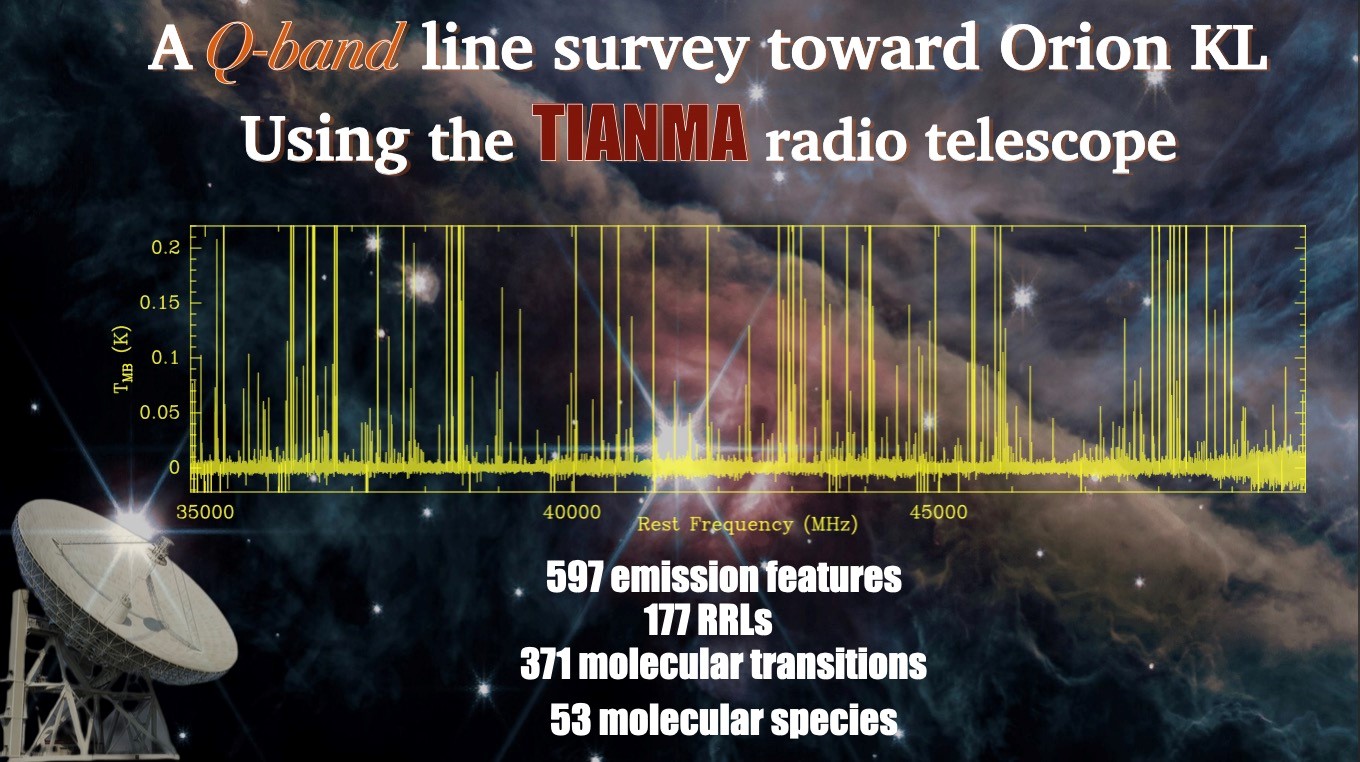 Astronomers conducted an unprecedented deep Q-band line survey towards Orion KL with the TMRT 65-m telescopeA research team from Shanghai Astronomical Observatory (SHAO) has recently completed a deep Q-band line scanning survey towards Orion KL using the Tianma 65 m radio telescope (TMRT), achieving the widest frequency coverage (35--50 GHz) and the highest sensitivity (~mK) spectra so far. In total, about 600 emission lines were detected, including 177 radio recombination lines (RLLs) and 371 molecular line transitions from 53 species. Among the 53 detected molecular species, 21 ones were firmly detected for the first time in Q-band. This survey highlights the capability of TMRT in searching for weak lines within extremely large wide-band spectra.Nov 10, 2022
-
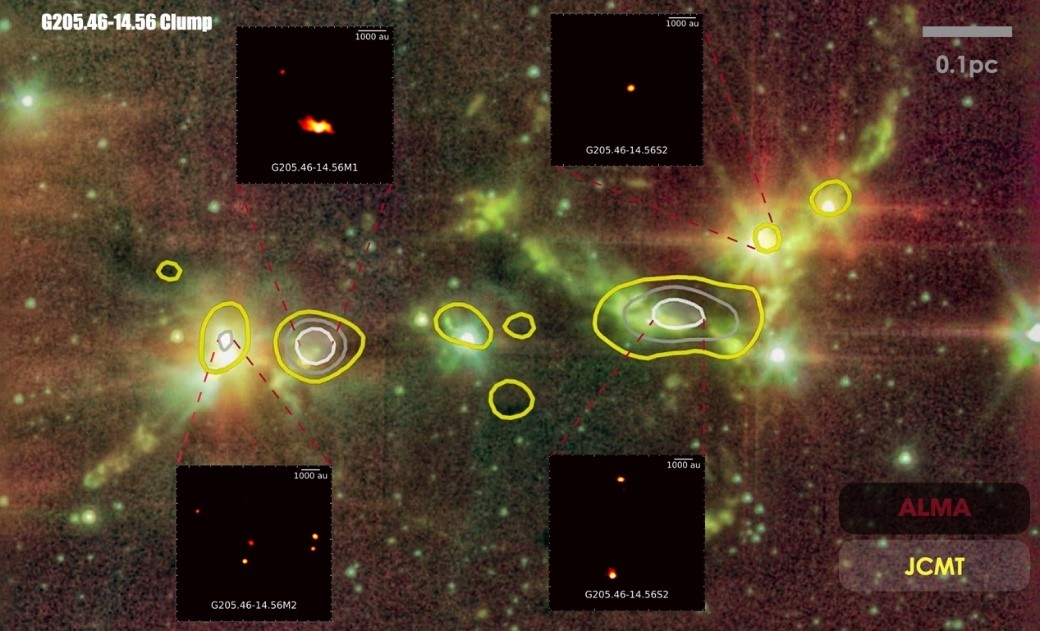 Astronomers find that denser and more turbulent environments tend to form multiple starsAstronomers studying stellar nurseries, the birthplace of stars in our galaxy, have found that nearly half of stars in the Galaxy are formed in binary/multiple stellar systems (think twins, triplets, quadruplets)Jul 12, 2022
-
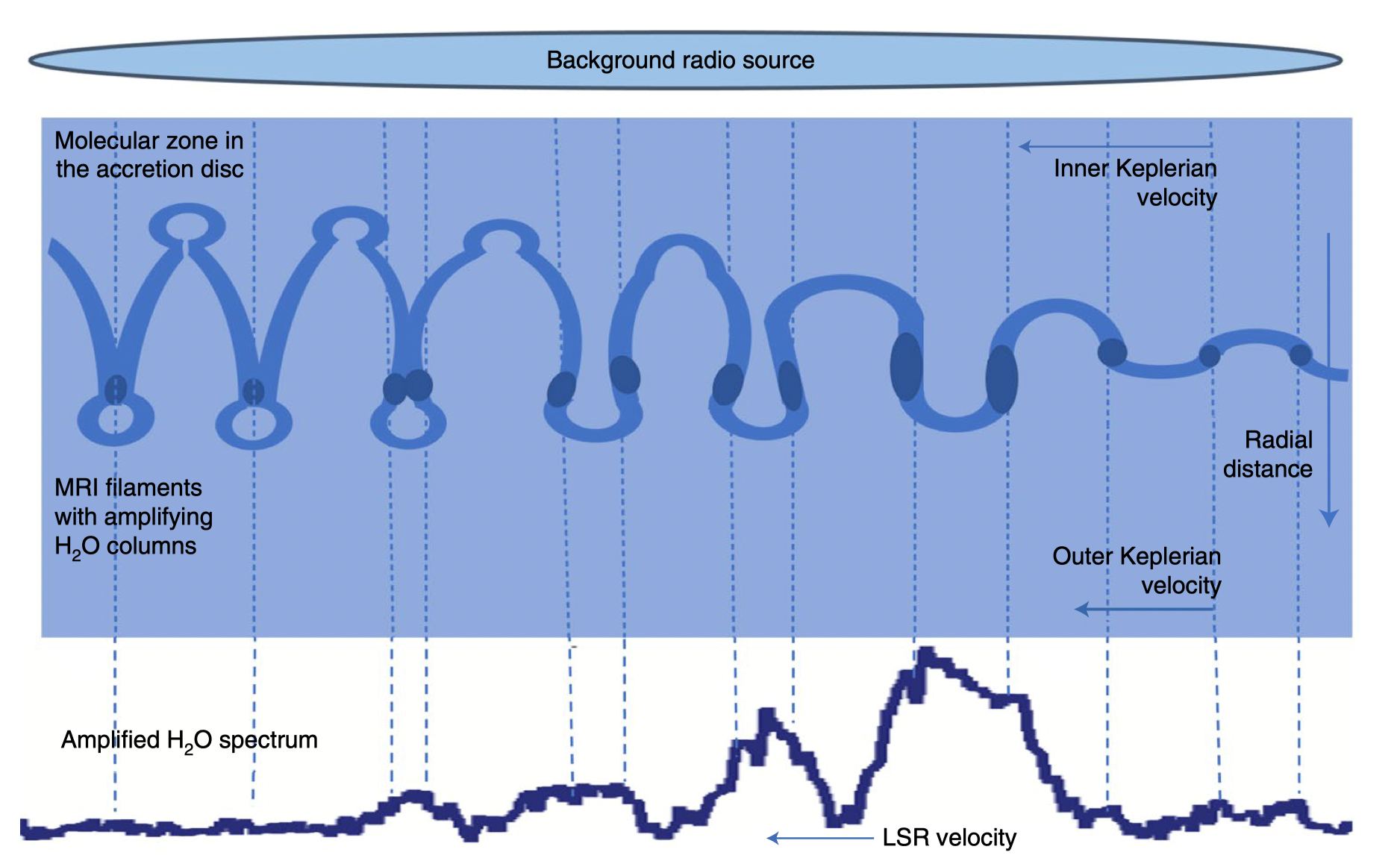 Evidence of periodic accretion disk instability found in a nearby spiral galaxyRecently, an international team including Prof. Tao An from the Shanghai Astronomical Observatory of the Chinese Academy of Sciences (CAS) found evidence of periodic instability in the accretion disk of the nearby galaxy NGC4258 through the space VLBI observations of water masers. The observational results were obtained on the basis of unprecedented ultra-high resolution technique for detecting gas accretion disks surrounding black holes, and the results also advance our understanding of the dynamic properties of accretion disks by revealing the existence of magneto-rotational instability in gas disks using masers as probes.Jul 06, 2022
-
Press conference on groundbreaking Galactic Center results from the Event Horizon Telescope CollaborationEvent Horizon Telescope (EHT) Collaboration and Shanghai Astronomical Observatory, CAS will hold a press conference to announce a groundbreaking Milky Way galaxy discovery from the EHT.Apr 29, 2022
-
Researchers Find Eight New Sources of 4.7 GHz OH Masers in Northern Star Formation RegionsRecently , a joint research team from National Time Service Center ( NTSC ) of the Chinese Academy of Sciences ( CAS ) .Shanghai Astronomical Observatory ( SHAO ) of ? CAS and SKA Observatory used the Shanghai Tianma Radio Telescope to search for 4.7 GHz OH masers in 155 northern star forming regions and discovered ? eight new sources .Thus , ? the researchers ? could use OH masers to probe high-mass stars at the earliest stages .Apr 25, 2022
-
Zodiacal dust emission found in three potentially habitable planet worlds from the Kepler missionAnd roughly triangular white glow appears in the night sky extending upwards from the Sun . This white glow is scattered light from the zodiacal dust cloud which is formed by comet dust deposits and asteroid collisions in our solar system ’ s asteroid belt .Does this kind of dust exist in extrasolar habitable worlds ? An international team led by Professor Jian Ge at Shanghai Astronomical Observatory , Chinese Academy of Sciences , has provided an answer to this question .Jan 14, 2022
-
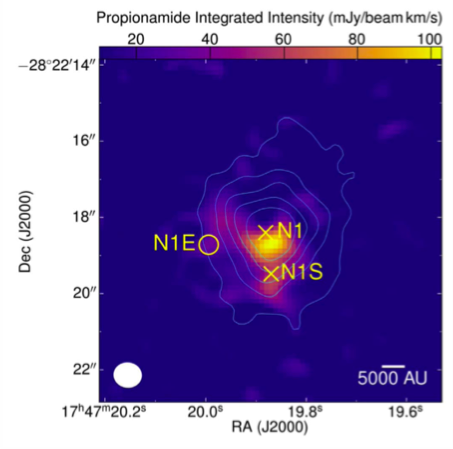 First detection of the largest peptide-like molecule in spaceRecently , an international group led by Juan Li and Junzhi Wang from Shanghai Astronomical Observatory ( SHAO ) .Detected propionamide ( C2H5CONH2 ) toward Sagittarius B2 ( Sgr B2 ) for the first time with the Atacama Large Millimeter/submillimeter Array ( ALMA ) .This is the largest peptide-like molecule detected in space .The study was published in The Astrophysical Journal .Science Contact : Juan Li , Shanghai Astronomical Observatory , lijuan @ shao . ac . cn Junzhi Wang , Shanghai Astronomical Observatory , zwang @ shao . ac . cn.Sep 23, 2021
-
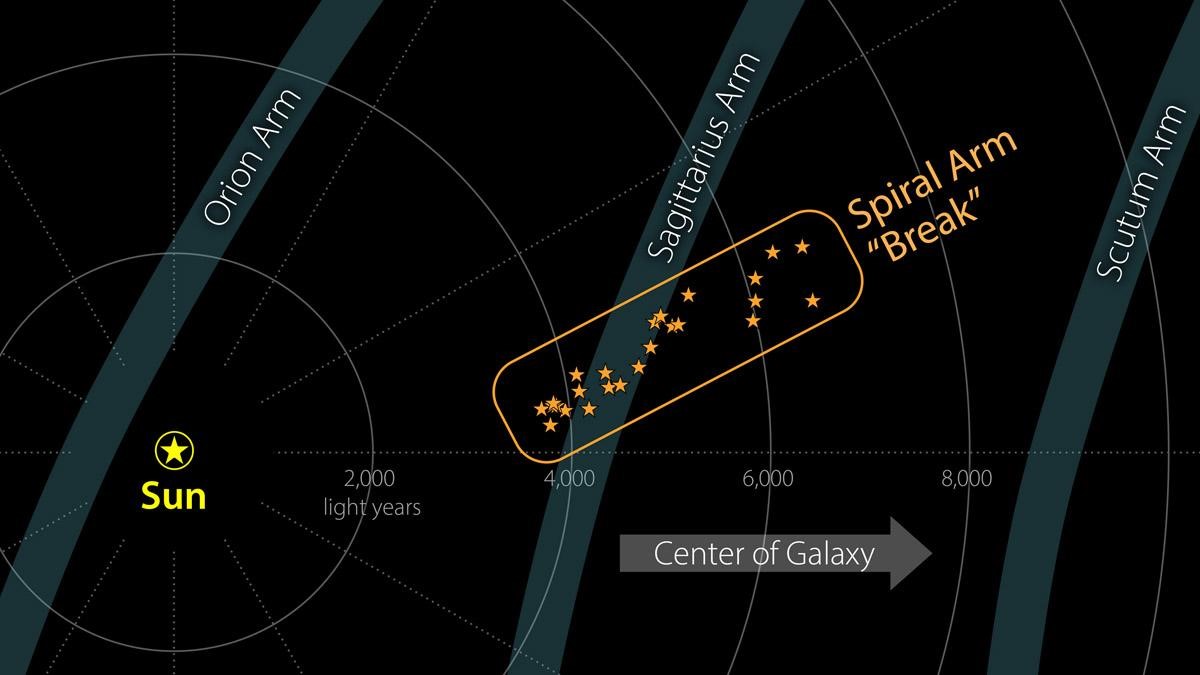 A break in the Milky Way’s Spiral Arms was hidden in plain sightAug 24, 2021
-
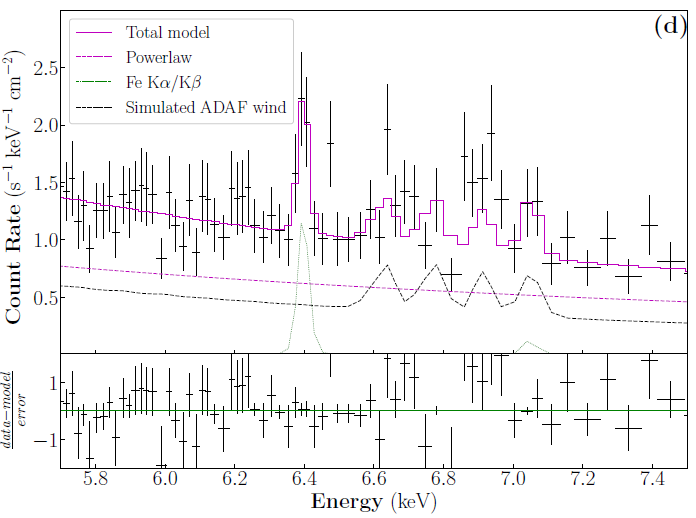 Chinese Scientists make an important step toward understanding physical processes around supermassive black holesSupermassive black holes in the universe are swallowing gas round them .Find direct evidence for the existence of strong wind launched from accretion flow around black holes .Depending on the gas temperature , black hole accretion flows are divided into two types , namely cold and hot ones .Most recently , these winds are believed to play a crucial role in galaxy evolution , according to the famous cosmological simulation Illustris-TNG . However , the direct observational evidence for the wind has always been difficult to obtain .Jul 13, 2021


