

Research News
-
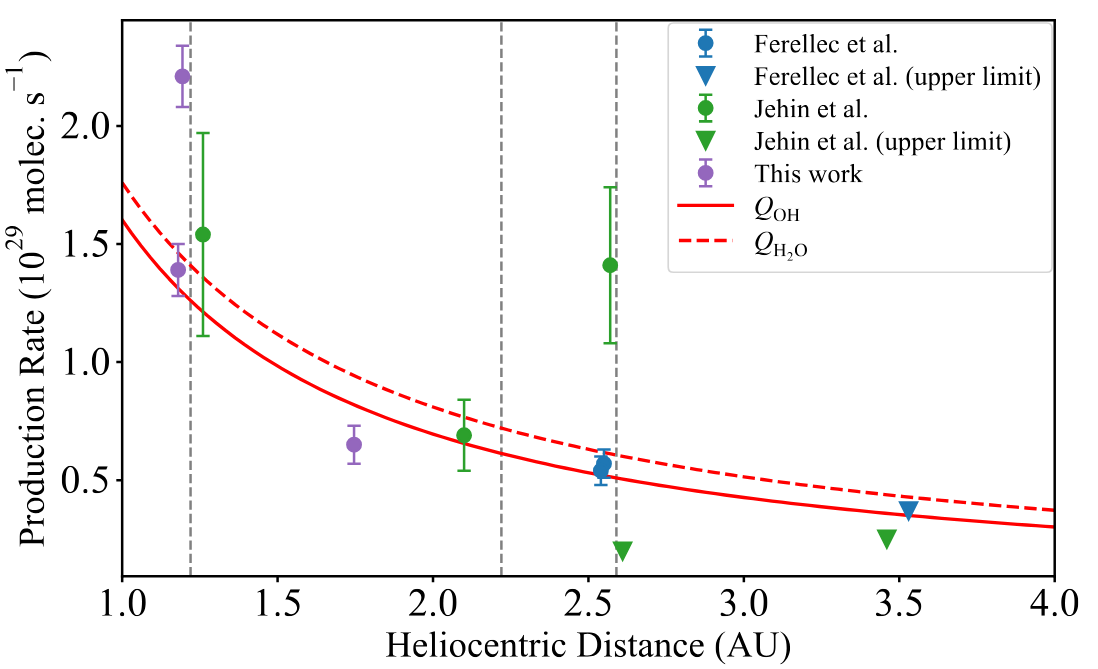 Tianma Radio Telescope Successfully Captures Radio Signals from Comet 12P/Pons-BrooksRecently, a joint research team led by the Shanghai Astronomical Observatory of the Chinese Academy of Sciences used the Tianma Radio Telescope to conduct multi-band radio observations of the returning comet 12P/Pons-Brooks (hereafter referred to as 12P). They systematically measured its water production rate during outburst activities and obtained the farthest detection of ammonia molecules in a Halley-type comet to date. The related research findings have been published in the international astronomy journal Astronomy & Astrophysics under the title "Pre-perihelion radio observations of comet 12P/Pons-Brooks with the Tianma Radio Telescope."Oct 17, 2025
-
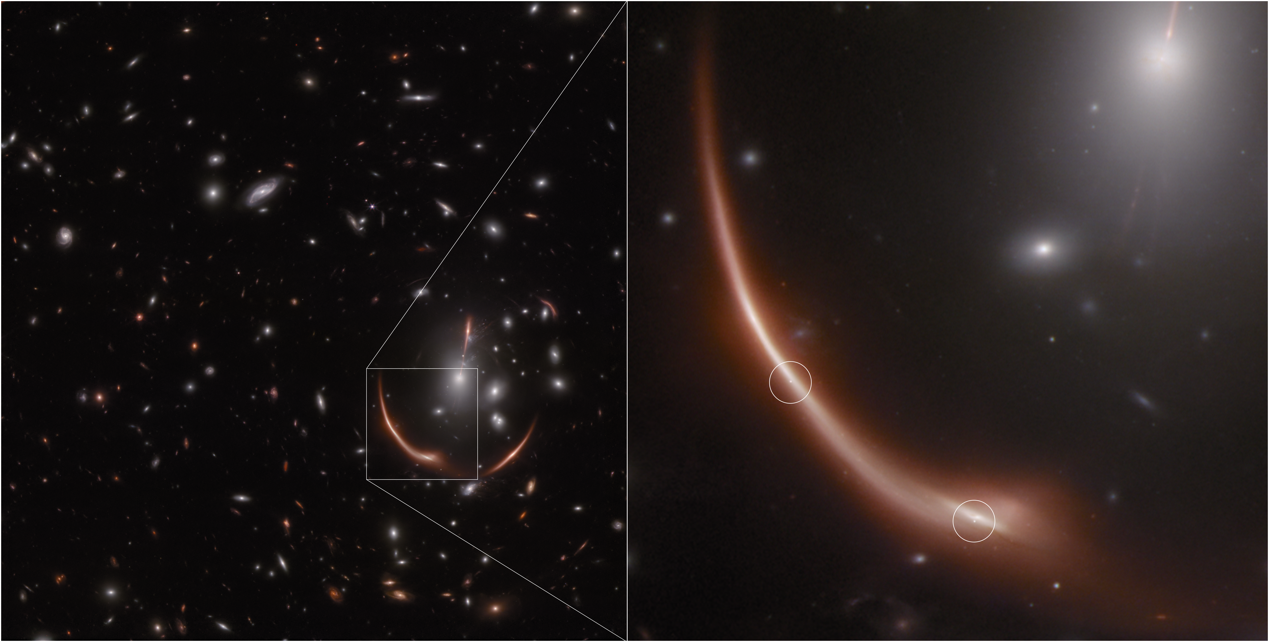 Pixelized Galaxy Cluster Strong Lens Modeling Significantly Improves Hubble Constant Constraints-- New Breakthrough in Measuring Cosmic Expansion Rate Using Lensed SupernovaeAn international collaboration led by the Shanghai Astronomical Observatory (SHAO), Chinese Academy of Sciences, has published a new study in the Monthly Notices of the Royal Astronomical Society (MNRAS) titled "CURLING II: Improvement of the H₀ Inference from Pixelized Cluster Strong Lens Modeling." This work presents, for the first time, a systematic demonstration that introducing pixelized strong-lensing modeling on the galaxy-cluster scale can significantly improve the precision of the inferred Hubble constant (H0)—a key parameter describing the expansion rate of the Universe. The study provides a new technical pathway for precisely determining the cosmic distance scale through strongly lensed supernovae.Oct 21, 2025
-
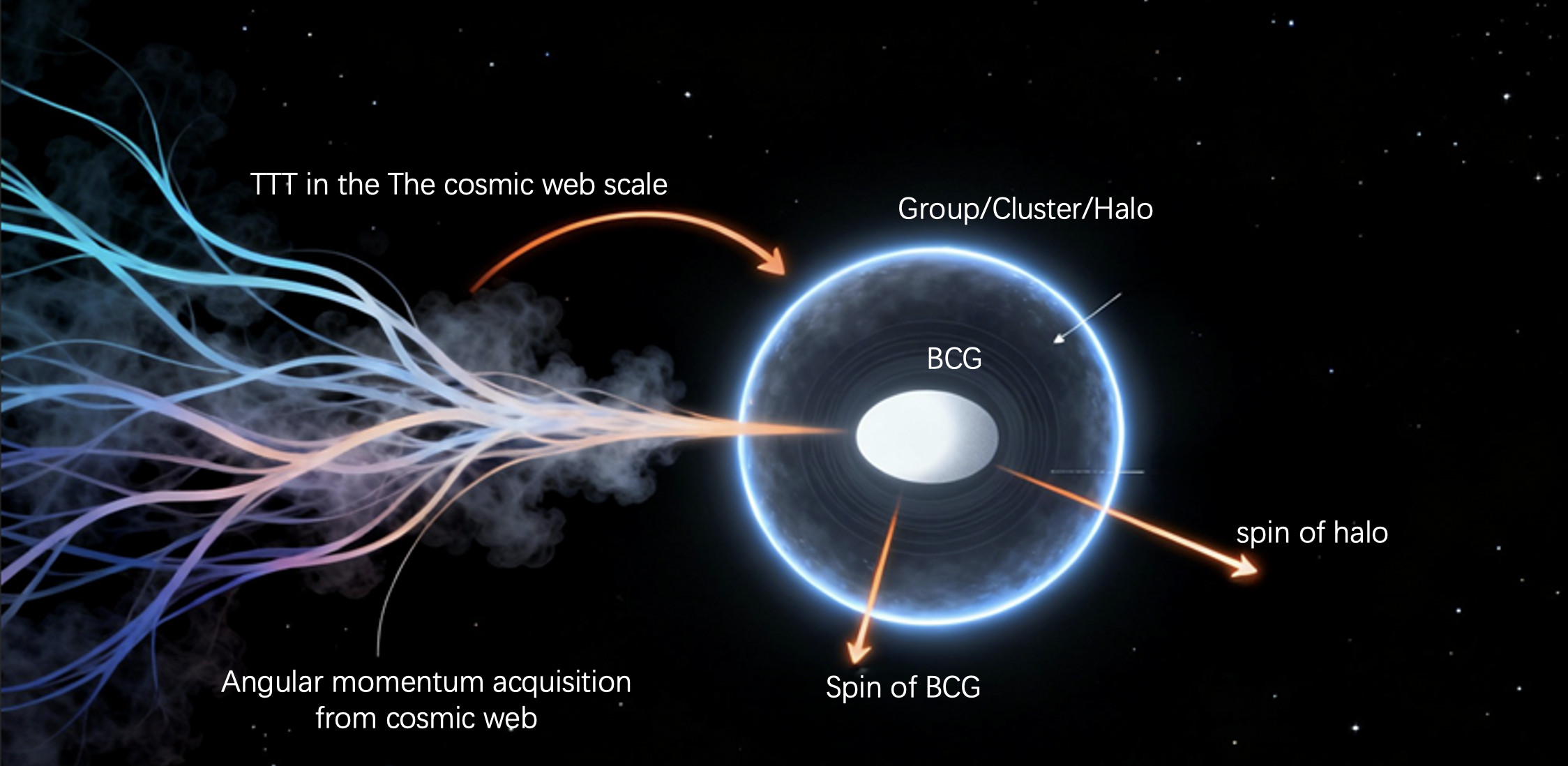 Shanghai Astronomical Observatory Reveals New Evidence for Angular Momentum Transfer: Spin Alignment between Galaxy Groups and Their Central GalaxiesRecently, Dr. Peng Wang, a research fellow at the Shanghai Astronomical Observatory of the Chinese Academy of Sciences, has systematically revealed for the first time a significant directional alignment between the spins of galaxy groups and those of their central galaxies on the celestial projection plane. Using a large spectroscopic sample from the Sloan Digital Sky Survey (SDSS), this study provides the first systematic observational evidence for such alignment. The results, titled “Observational Evidence for Spin Alignment between Galaxy Groups and Their Central Galaxies,” have been published in The Astrophysical Journal Letters. Dr. Wang is the sole author of the paper (see the screenshot of the article’s first page). By focusing on “spin” (angular momentum)—a direct dynamical quantity—the research highlights the crucial role of galaxy groups as an intermediate-scale “bridge” in the hierarchical transfer of angular momentum from large-scale cosmic structures (cosmic web/filaments) down to galaxies.Oct 21, 2025
-
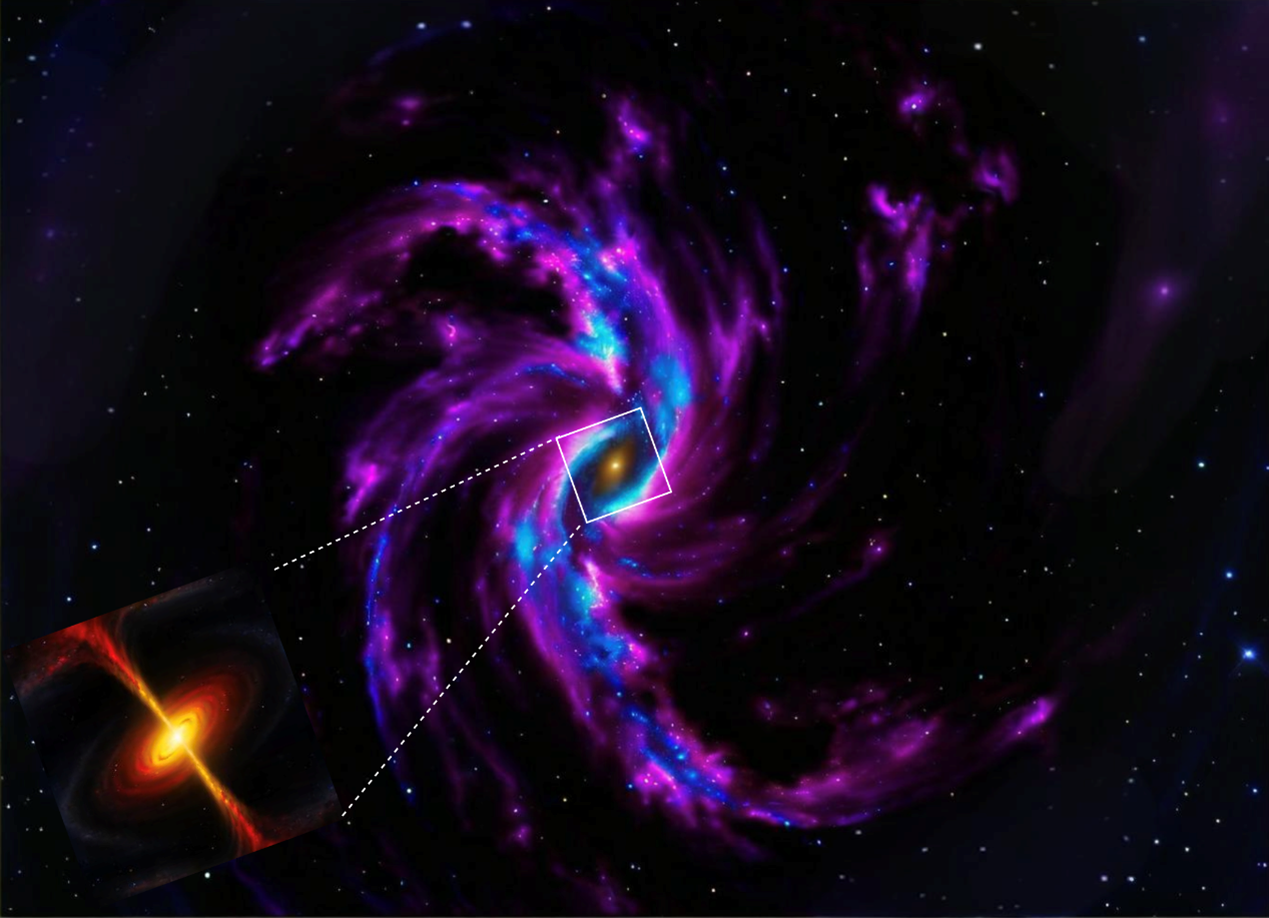 Scientists Reveal Process of Gas Accretion in Massive Star FormationResearchers from the Shanghai Astronomical Observatory (SHAO) of the Chinese Academy of Sciences have revealed for the first time how gas flows from vast distances toward the disk surrounding a nascent massive star in the process of star formation.Sep 18, 2025
-
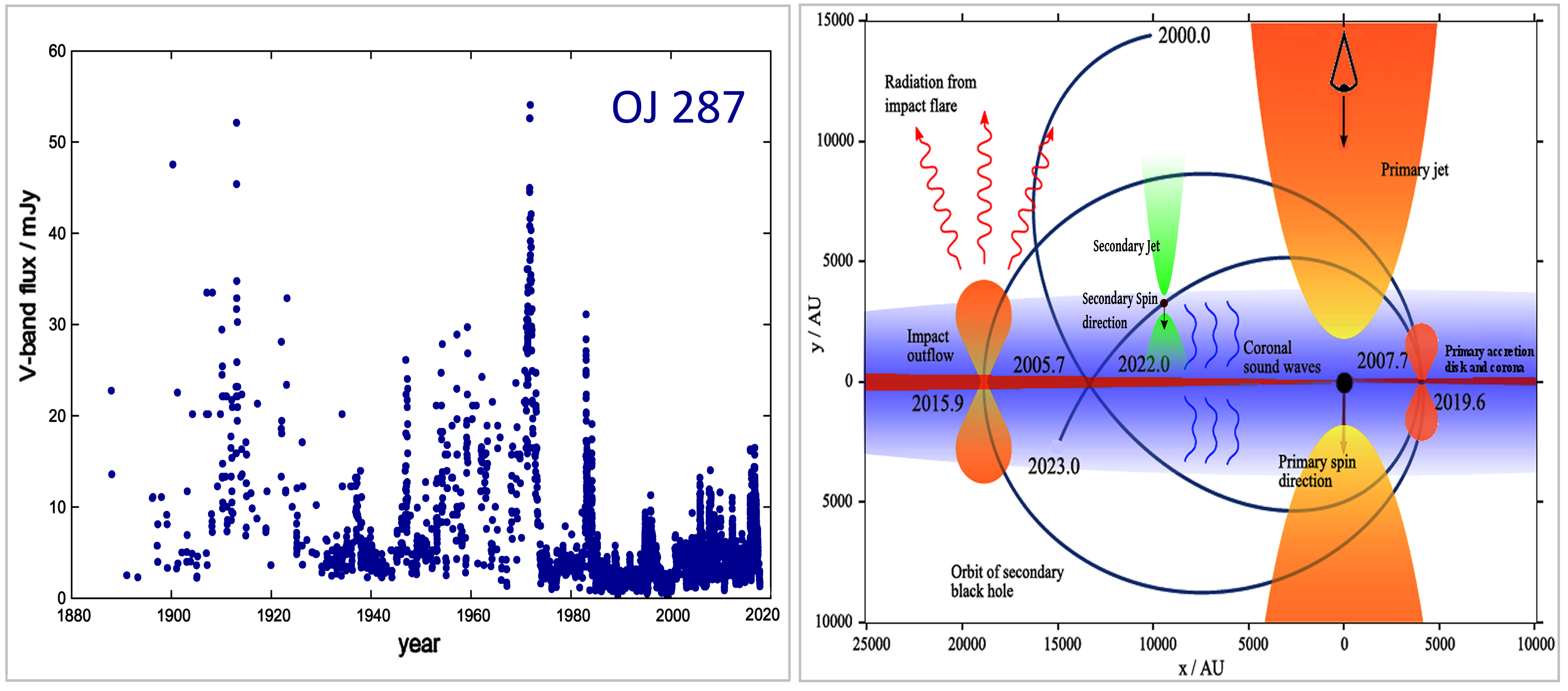 Researchers Discover Emission from Secondary Black Hole in Binary System of Blazar OJ 287OJ 287 is recognized as a binary black hole system of which the signals have been associated either with the ultramassive primary black hole or with the gas accretion disk surrounding it. From the most comprehensive polarization monitoring to date, the researchers claim they are able to “see” the secondary black hole for the first time by using measurements of polarized light coming from OJ 287.Nov 13, 2023
-
 Heterogeneity of Earth's Mantle May Be Relics of Moon FormationAn interdisciplinary international research team has recently discovered that a massive anomaly deep within the Earth’s interior may be a remnant of the collision about 4.5 billion years ago that formed the Moon.Nov 02, 2023
-
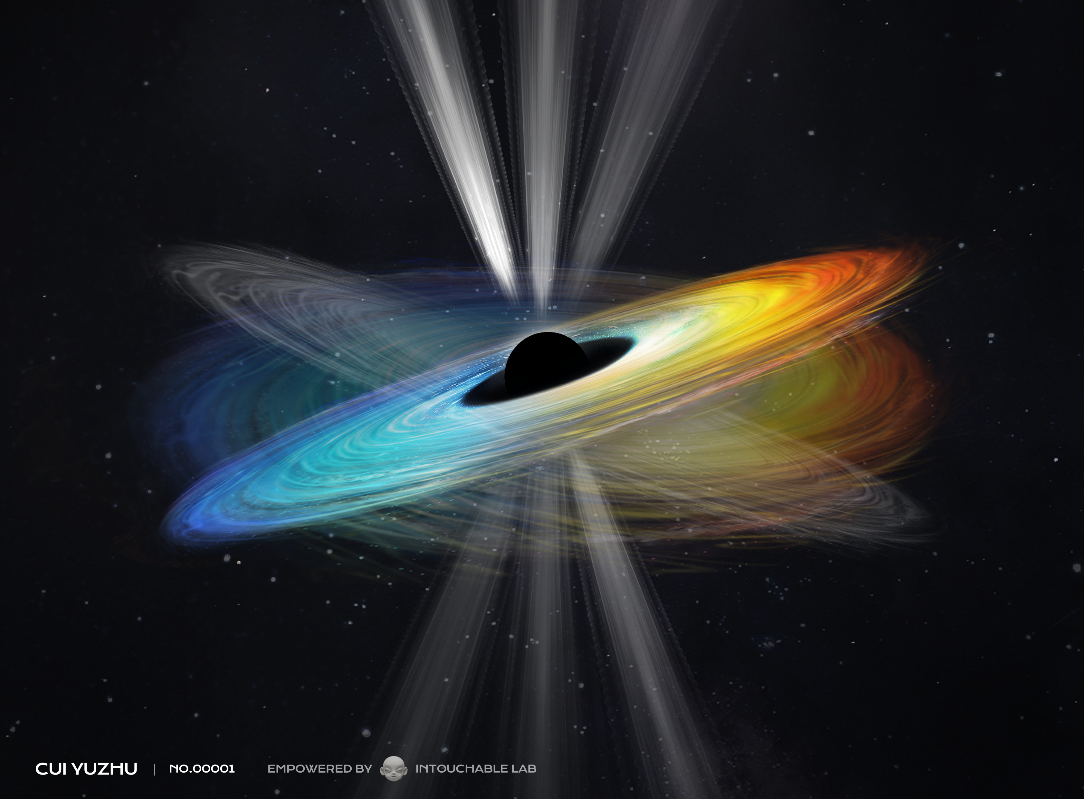 Monitoring of Radio Galaxy M87 Confirms Black Hole SpinThe nearby radio galaxy M87 has recently been discovered to exhibit an oscillating jet. This investigation found the jet swinging up and down with an amplitude of about 10 degrees. Through the extensive analysis of data observed from 2000 to 2022 by various international networks of radio telescopes, the research team unveils a recurring 11-year cycle in the precessing motion of the jet base, as predicted by Einstein’s general relativity. This work successfully linked the dynamics of the jet with the central supermassive black hole, offering the evidence for the existence of M87’s black hole spin.Sep 27, 2023
-
 How Does "MAD" Accretion Form Around a Black Hole?A research team involving the Shanghai Astronomical Observatory performed a multi-wavelength observational study on the outburst of a black hole X-ray binary by using multiple telescopes including the China's first X-ray astronomical satellite “Insight-HXMT”. This study is published in Science on September 1st, 2023, which fist reveals the magnetic field transport processes in the accretion flow and the formation of a magnetically arrested disk around the black hole.Sep 01, 2023
-
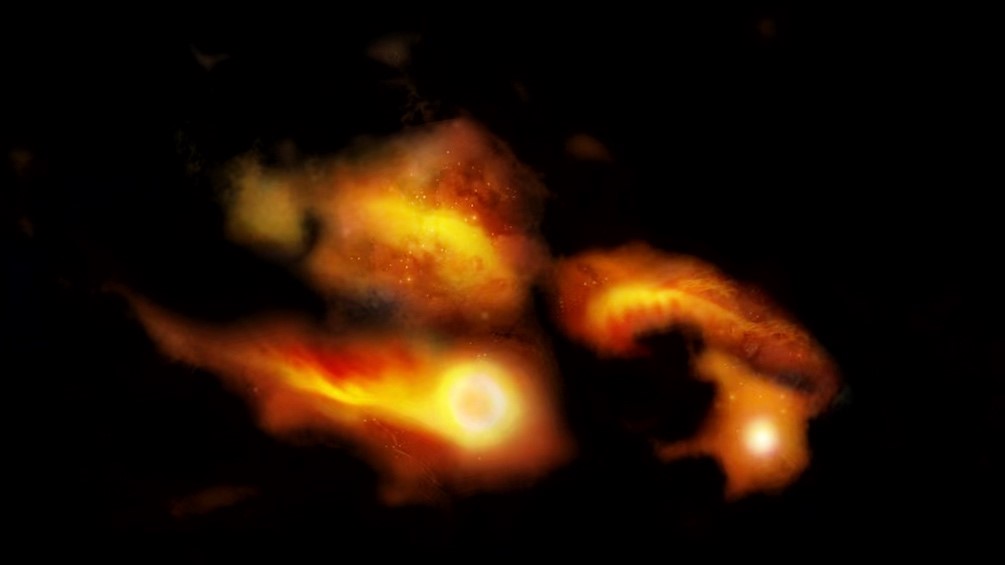 Astronomers Discover a Forming Quadruple-star System: More Intimate, More ComplexThe international research team of ALMASOP, led by researcher Tie Liu at the Shanghai Astronomical Observatory, utilized the advanced Atacama Large Millimeter/submillimeter Array (ALMA) to capture a rare and forming "four-star system" in one of the dense cores of Orion's Giant Molecular Cloud and discovered ribbon-like dust structures and complex outflow in the interior, which is significant for revealing the formation mechanism of the multiple-star formation.Aug 07, 2023
-
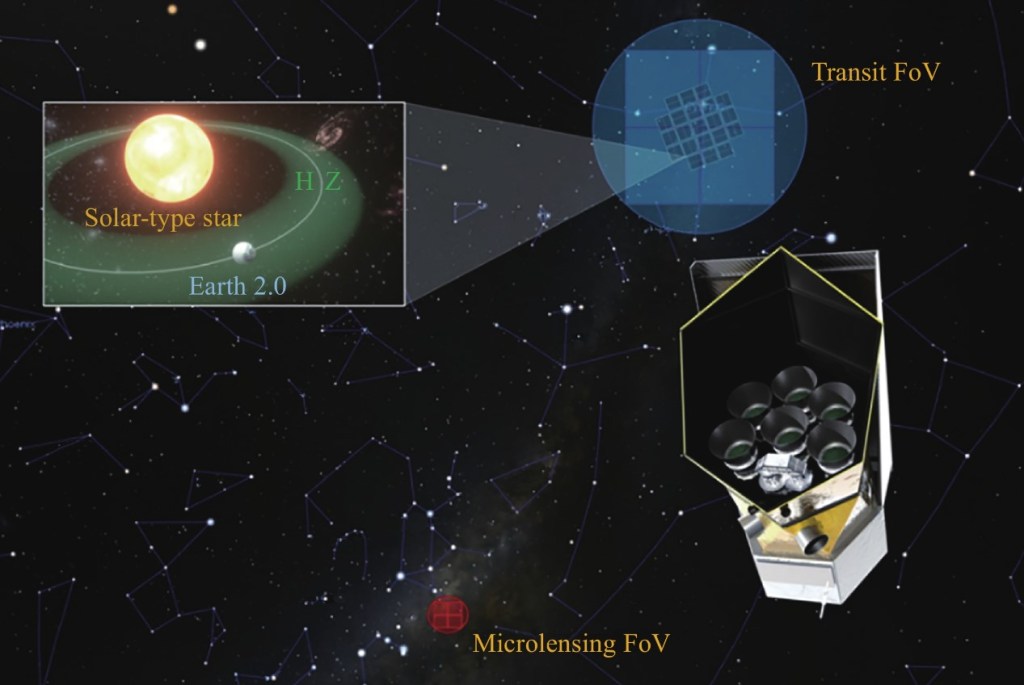 China to launch “Earth 2.0” exoplanet observatory in 2028Aug 28, 2024


