

Research News
-
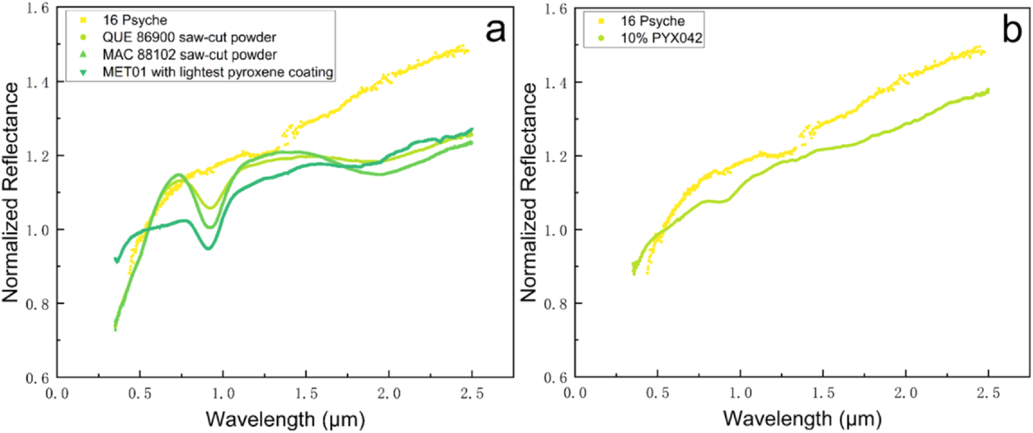 Quantitative Study of Surface Composition of Metallic Asteroids Based on Reflectance SpectraJun 16, 2026
-
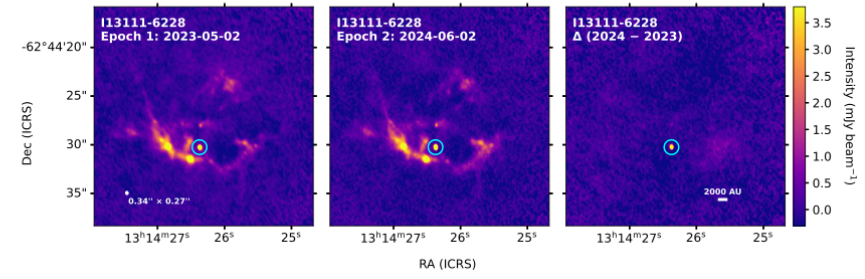 Catching a Stellar Growth Spurt: Discover Brightness Variations in Massive ProtoclustersResearchers from Shanghai Astronomical Observatory have carried out the first statistical search for millimeter continuum variability in massive protoclusters using multi-epoch observations from the Atacama Large Millimeter/submillimeter Array (ALMA). By analyzing 383 condensations in 22 massive star-forming regions, the team identified five variable sources and established the first statistical constraints on millimeter variability in these environments. The results highlight the unique capability of high-resolution interferometric observations for studying protostellar variability and open new opportunities for time-domain studies of massive star formation. The study was published in The Astrophysical Journal.Jun 16, 2026
-
 Researchers Use Counterjet to Reveal Clumpy Gas Near 3C 84 Black HoleResearchers from the Shanghai Astronomical Observatory, Chinese Academy of Sciences, have utilized the extremely faint counterjet in the nearby radio galaxy 3C 84 as a tomographic probe, discovering that the dense ionized gas surrounding the central supermassive black hole is lumpy and inhomogeneous, the team successfully used this hard-to-see jet as a moving backlight to illuminate the black hole's hidden environment. The study was published in The Astrophysical Journal.Jun 11, 2026
-
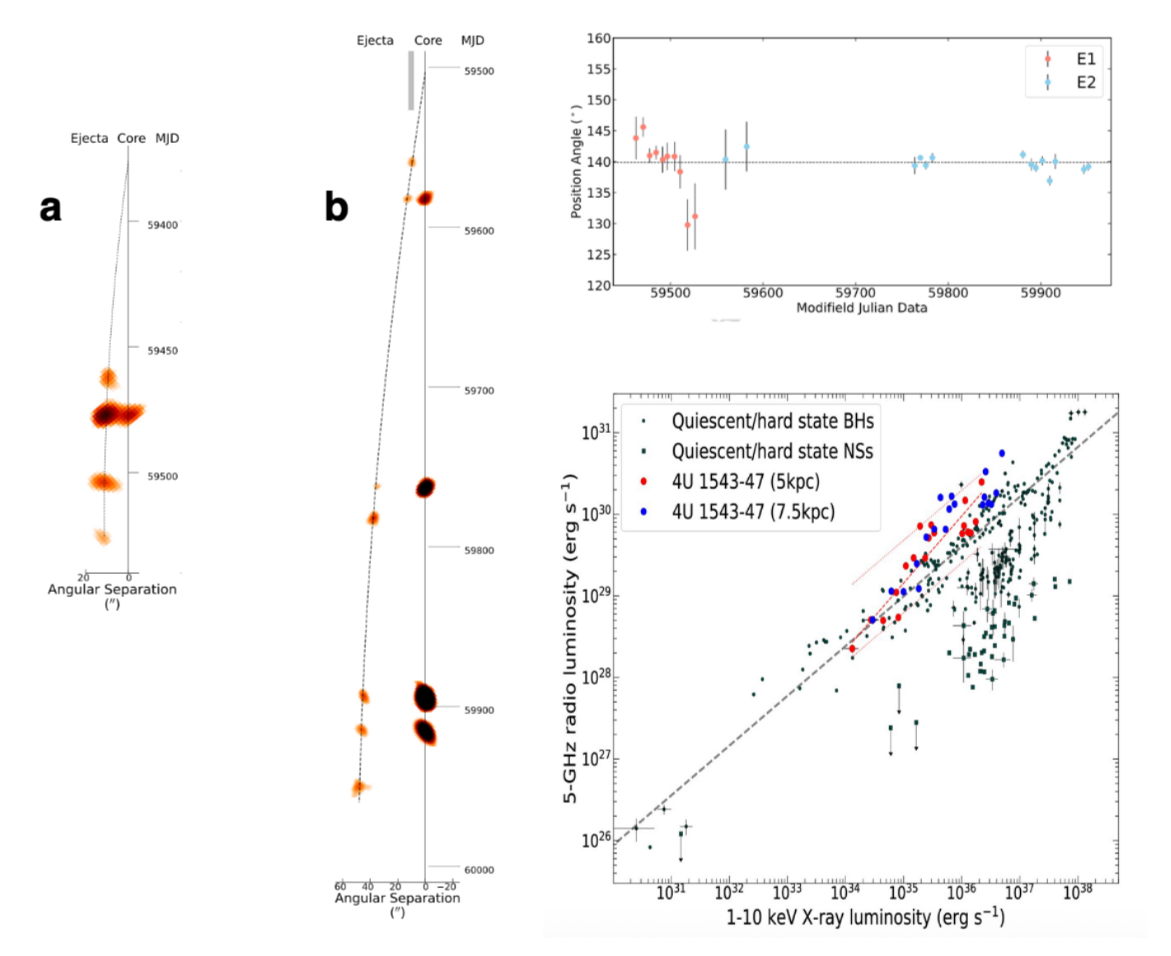 The observational high energy astrophysics group and their collaborators have discovered highly relativistic jets in microquasarsJun 10, 2026
-
 ALMA High-Resolution Observations Reveal the Growth Spurt of Massive Stars in the Extreme Environment of the Galactic CenterRecently, researchers from Shanghai Astronomical Observatory have conducted high-resolution observations of the Galactic Center region using the Atacama Large Millimeter/submillimeter Array (ALMA), focusing on an early O-type massive protostar and its surrounding Keplerian accretion disk in the Sagittarius C molecular cloud within the Central Molecular Zone (CMZ). The research team carried out a detailed analysis of the emission features and spatial distribution of complex organic molecules in this system, uncovering the intricate dynamical structure among the inner accretion disk, outer envelope, and gravitationally collapsing accretion flows. This achievement provides crucial observational evidence for understanding the mass accumulation process of early O-type stars in extreme environments and has been published in The Astrophysical Journal.Jun 08, 2026
-
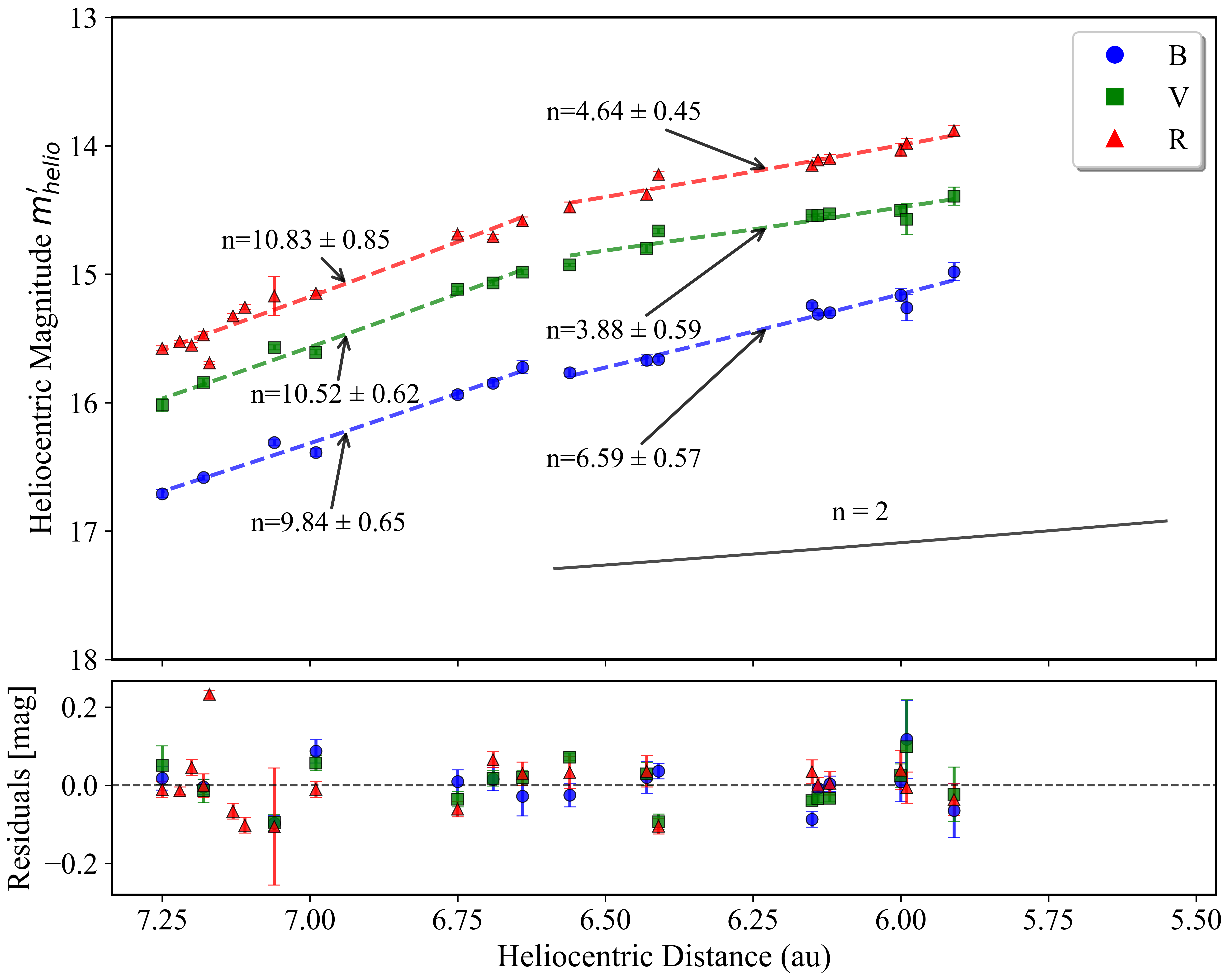 Progress in the Study of Distant Activity of Long-Period CometsRecently, a research team from the Shanghai Astronomical Observatory (SHAO), in collaboration with the Purple Mountain Observatory (PMO), has achieved significant progress in the study of distant activity of long-period comets. By conducting systematic observations of the long-period comet C/2023 A3 (Tsuchinshan–ATLAS) using the high-precision telescope (YHPT) at the PMO Yao'an Observation Station, this study reveals, for the first time, the activity enhancement process of this comet at large heliocentric distances (from 7.2 au to 5.9 au). The findings characterize the evolutionary features of its distant activity and provide observational evidence for understanding the activity mechanisms and evolutionary patterns of long-period comets at large heliocentric distances. The results were published online on May 25, 2026, in The Astrophysical Journal.Jun 02, 2026
-
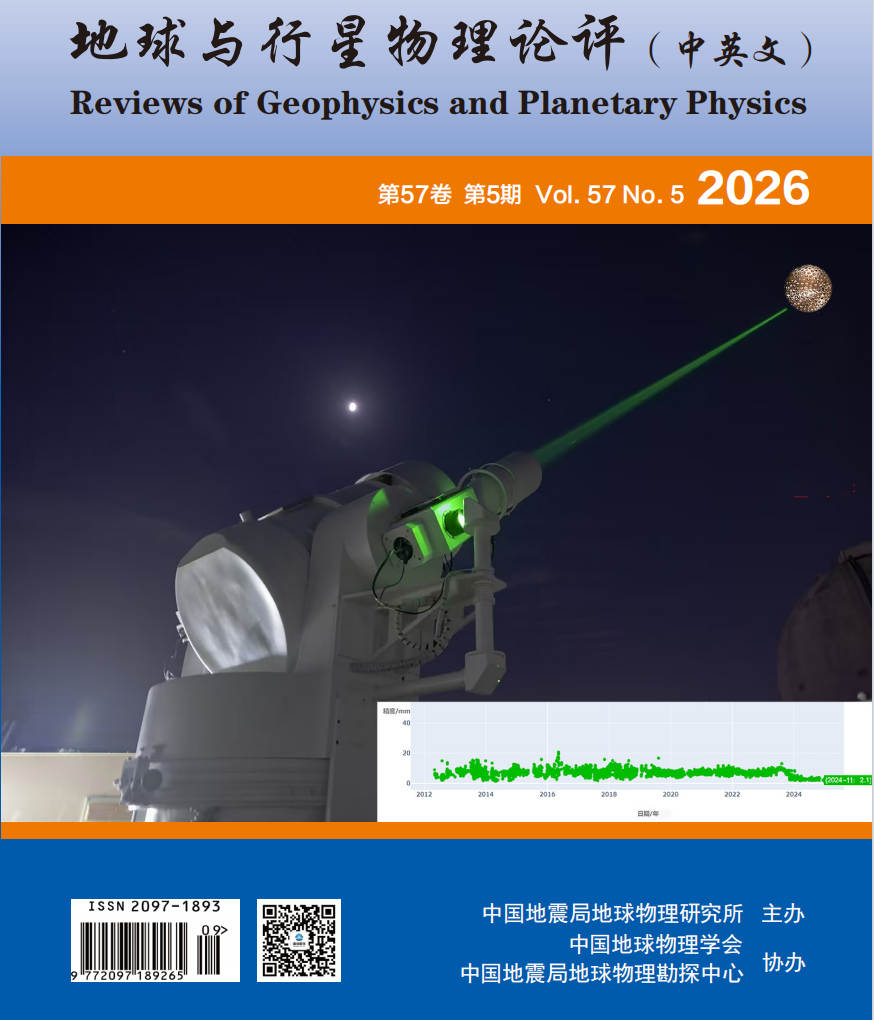 China’s 5 kHz Millimeter-Level Satellite Laser Ranging System Passes International ValidationRecently, a 5 kHz high-repetition-rate millimeter-precision satellite laser ranging (SLR) system led by the Shanghai Astronomical Observatory (SHAO), Chinese Academy of Sciences, in collaboration with Changchun University of Science and Technology, Shanghai University, and Beijing ShengLei Technology Co., Ltd., has achieved a significant leap in performance. The system is based on the 60 cm satellite laser telescope (Equipment No. 1000210171983016), a national platform-calibrated device at SHAO. The ground-target ranging accuracy has improved from the traditional 6–8 mm to 2–3 mm, with an annual average accuracy stabilized at 2.4 mm. The overall satellite ranging accuracy has increased from 6–10 mm to 2–4 mm, with the Beidou satellite in geosynchronous orbit achieving an accuracy of 1.9 mm. According to data evaluated by the International Laser Ranging Service (ILRS), the normal point accuracy for the international standard satellite Lageos reaches 0.9 mm, with short-term orbital stability of 5.8 mm and long-term stability of 2.1 mm. All indicators rank among the best internationally, positioning the comprehensive capability of the SLR station within the first echelon of global ILRS stations. This achievement, titled "High Data Quality, High-Precision Millimeter-Level 5 kHz Repetition-Rate Satellite Laser Ranging," will be published as a cover paper in the journal Reviews of Geophysics and Planetary Physics (Chinese/English), showcasing China’s major innovation in this field. The system’s key indicators are among the highest across ILRS stations worldwide and represent the best performance among domestic SLR systems, providing an effective approach for high-precision measurement of space targets.May 25, 2026
-
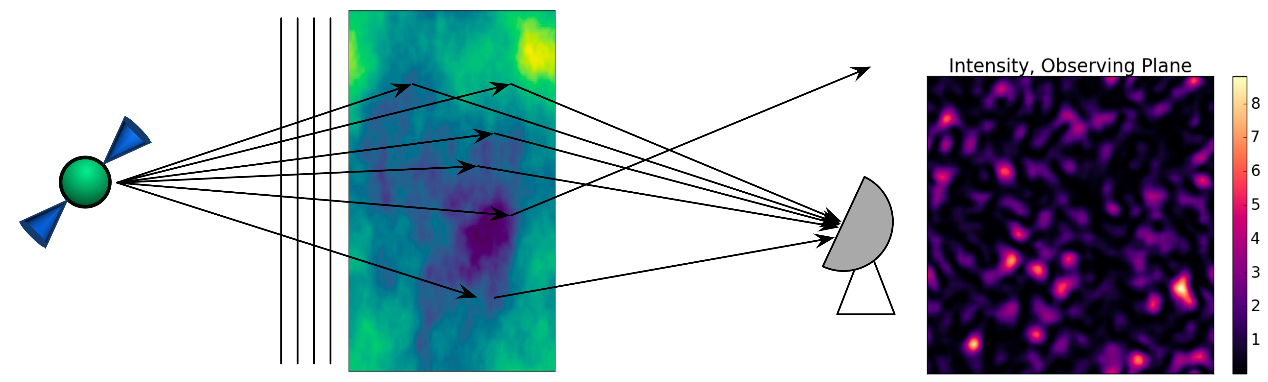 Tianma Telescope Team Achieves Major Progress in Interstellar Scintillation Study of Magnetar XTE J1810-197Recently, the Tianma Telescope team from the Shanghai Astronomical Observatory (SHAO) of the Chinese Academy of Sciences has achieved significant progress in the study of interstellar scintillation properties of the magnetar XTE J1810-197. Their key advancements include: explaining why previous low-frequency observations failed to characterize its diffractive interstellar scintillation timescale, pinpointing the location of its interstellar scattering screen, and setting a new record for the highest-frequency detection of a "scintillation arc." These findings have been published in the international journal Chinese Physics Letters.Apr 30, 2026
-
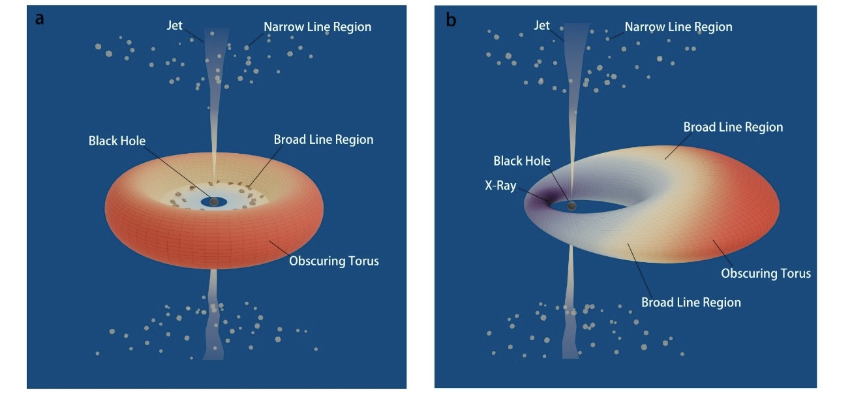 Adding a Twist: How Lopsided Disks Around Supermassive Black Holes Unify the Wild Variability of Active Galactic NucleiA new study proposes that the violent flickering and dramatic "changing looks" of supermassive black holes are driven by a single, overlooked geometric feature: elliptical, eccentric accretion disks. The research, published April 15 in Physical Review D, offers a unified physical model that connects the elusive origins of broad emission lines, the mysterious X-ray corona, and asymmetric dust rings in Active Galactic Nuclei (AGN).Apr 22, 2026
-
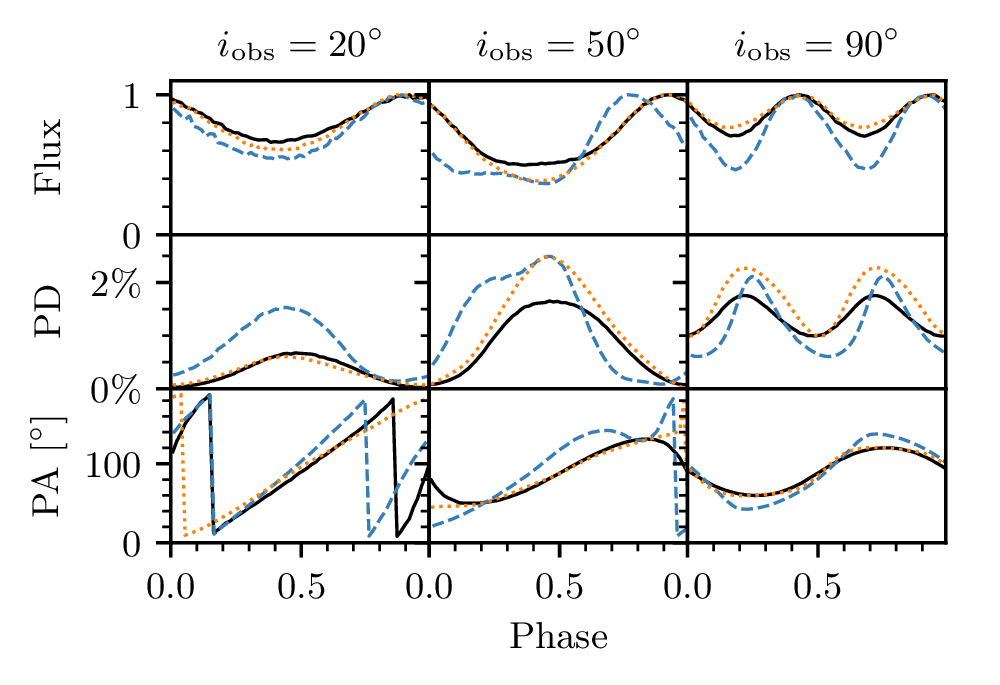 Major Progress in Constraining Neutron Star Equation of State Using X-ray Timing SignalsRecently, the Observational High Energy Astrophysics group led by Professor Wenfei Yu at the Shanghai Astronomical Observatory (SHAO), in collaboration with Associate Professor Wenda Zhang of the National Astronomical Observatories of China (NAOC), has made a milestone achievement in the core science of X-ray timing astronomy -- constraining the equation of state of neutron stars using X-ray pulse profiles originating from hot spots on the surface of rapidly rotating neutron stars. The corresponding advance has been published online on 24 March in The Monthly Notices of the Royal Astronomical Society (MNRAS).Apr 14, 2026


