

Research News
-
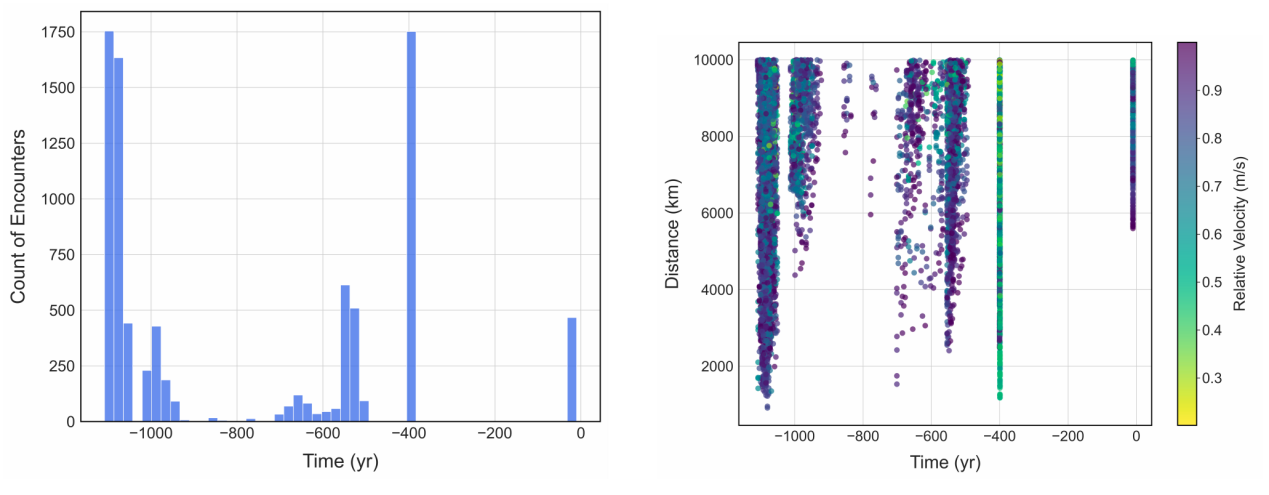 Advancing the Search for Near-Earth Asteroid Pairs and the Study of Their Orbital EvolutionThe research team utilized orbital similarity criteria and numerical simulations to systematically screen known near-Earth asteroids, identifying multiple groups of potential candidates that may share a common origin, and determining their possible separation times. This study not only deepens our understanding of the evolutionary mechanisms of near-Earth asteroids and the formation process of small bodies in the solar system but also effectively expands the sample of near-Earth asteroids, providing a basis for selecting sources for future deep-space exploration missions targeting near-Earth asteroids. Recently, the Shanghai Astronomical Observatory of the Chinese Academy of Sciences, in collaboration with Anhui Normal University, has made new progress in the search for near-Earth asteroid Paircandidates and the study of their orbital evolution. The findings were published in the international astronomical journal The Astrophysical Journal.Aug 12, 2026
-
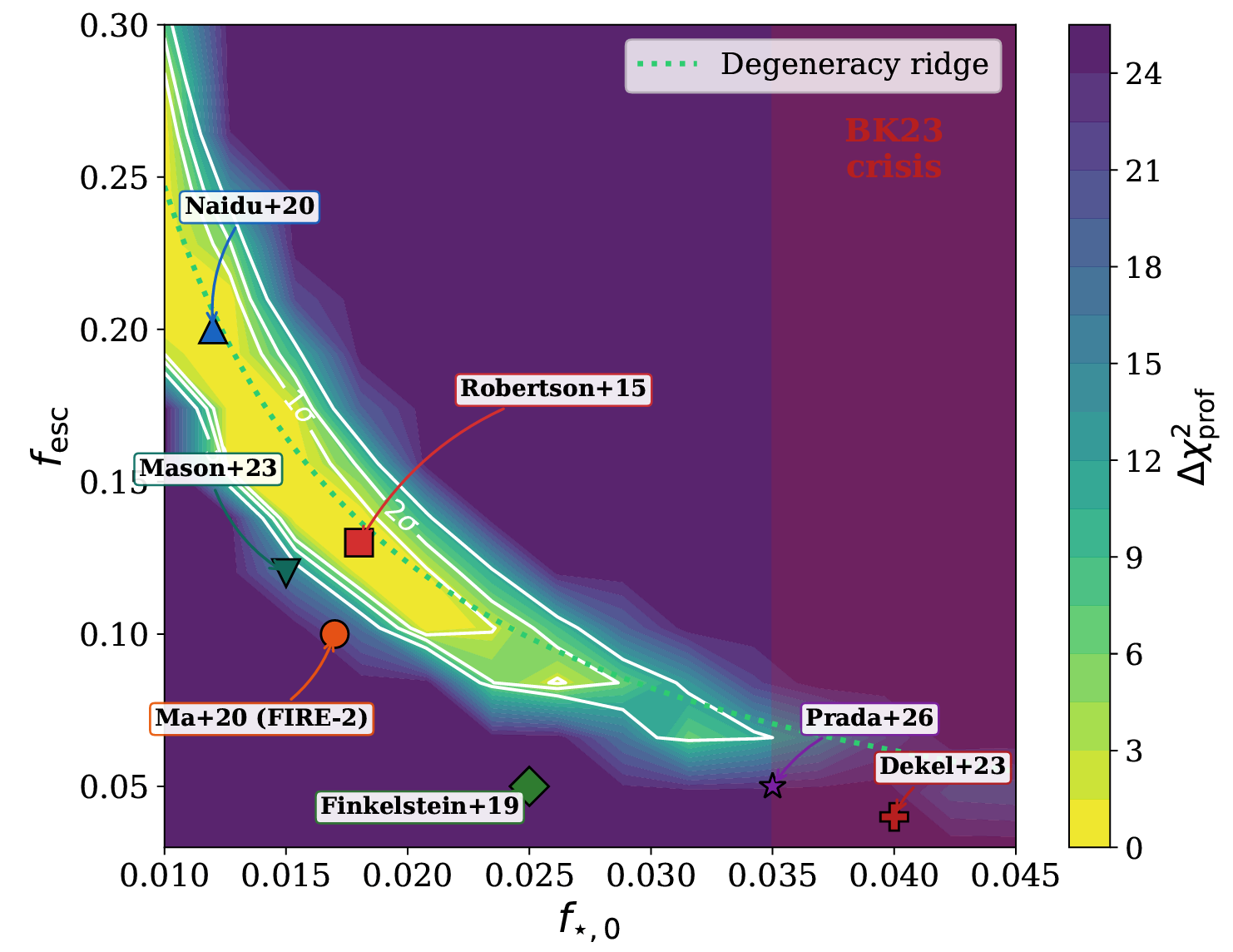 Reionization Degeneracy Can Explain the JWST Early Galaxy “Crisis”Jul 29, 2026
-
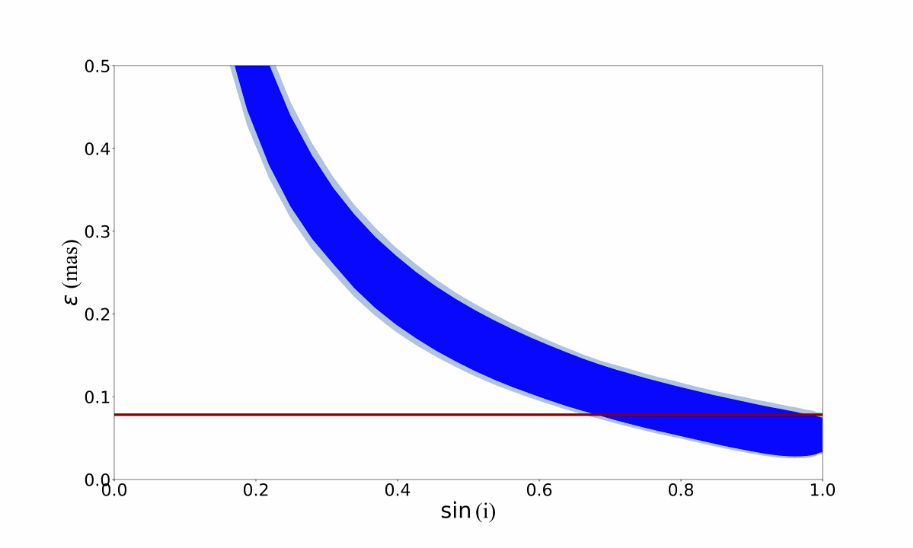 Gaia’s ‘Excess Noise’ Helps Constrain the Masses of Hidden Binary CompanionsThe astrometry team at the Shanghai Astronomical Observatory (SHAO), Chinese Academy of Sciences, has developed a new method to use Gaia DR3 astrometric “excess noise” to constrain the orbital inclinations of binary systems and, in turn, improve mass estimates for unseen companions. The study was published in the international journal Astronomy & Astrophysics.Jul 28, 2026
-
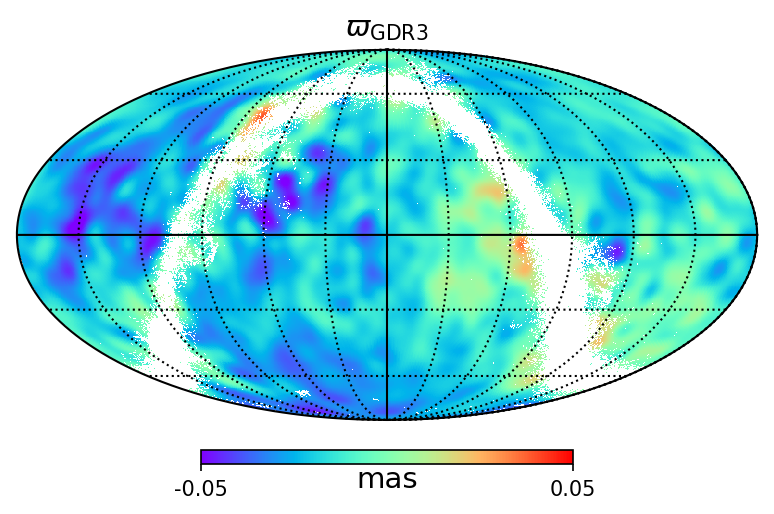 A Hybrid Method for Refining Gaia’s Parallax Zero PointJul 28, 2026
-
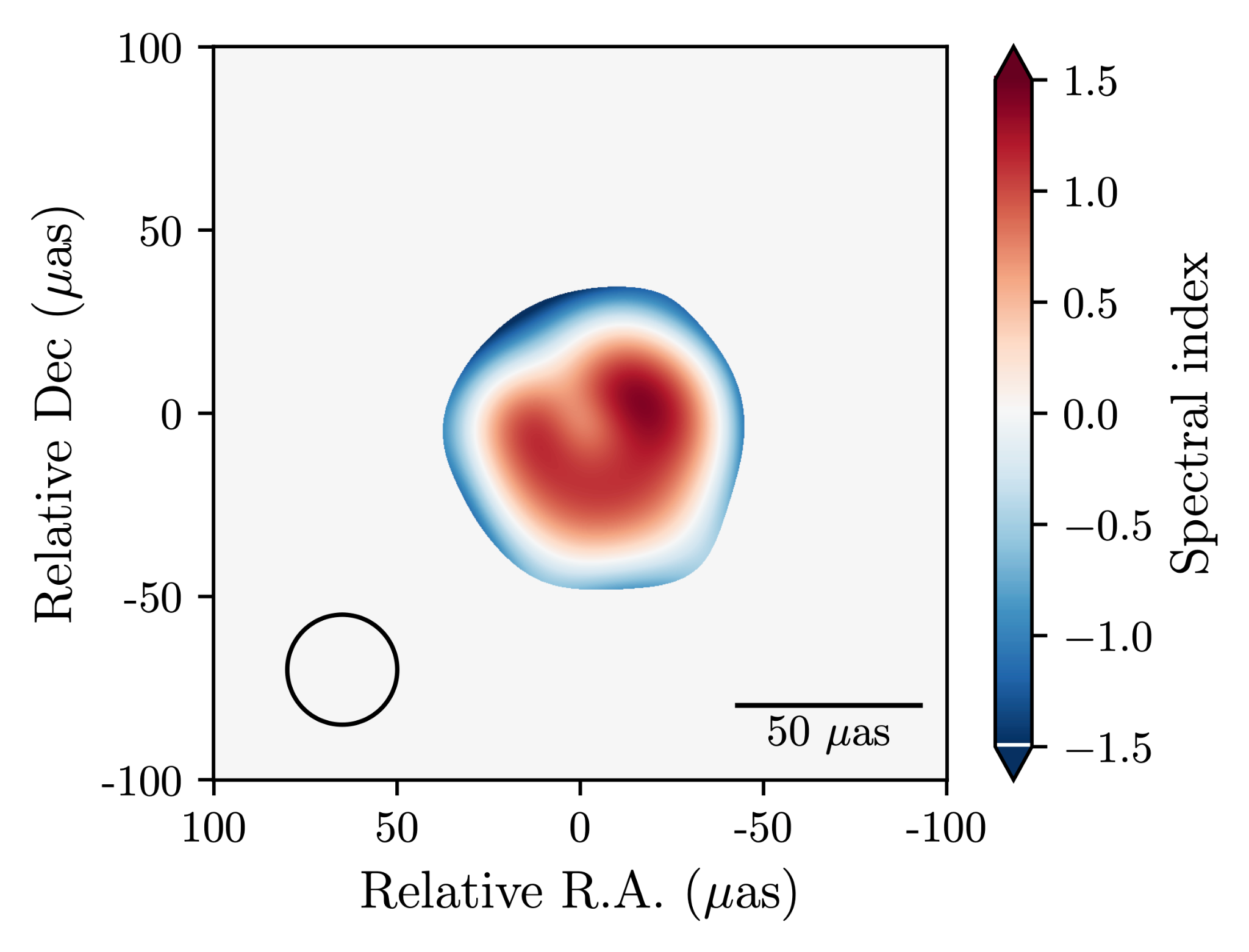 From Seeing a Black Hole to Understanding Its Physics — Dual-Frequency Imaging Unveils the Horizon-Scale Emission Properties of M87Recently, researchers from the Shanghai Astronomical Observatory of the Chinese Academy of Sciences, together with international collaborators, carried out the first spatially resolved dual-frequency spectral study of the M87 black hole using observations obtained in 2018 with the Event Horizon Telescope (EHT) and the Global Millimeter VLBI Array (GMVA). By combining horizon-scale images obtained at 1.3 mm and 3.5 mm, the team produced the first spatially resolved spectral-index map on event-horizon scales and revealed how the spectral index changes with distance from the black hole (Figure 1). This work provides a new way to characterize the physical conditions of the plasma surrounding a black hole, going beyond imaging the structure alone. The results have been published in The Astrophysical Journal Letters.Jul 14, 2026
-
 Constraining Ultralight Scalar and Dark Photon Dark Matter with Pulsar Timing ArraysRecently, a team led by Dr. Kuo Liu and Dr. Siyuan Chen from the Shanghai Astronomical Observatory, Chinese Academy of Sciences, together with Prof. Xingjiang Zhu from Beijing Normal University, has made significant progress in testing dark matter using pulsar timing array (PTA) data. The study was published in Physical Review D.Jul 16, 2026
-
Understanding the Variability of Local Analogs of Little Red DotsAn international research team led by the Early Universe and High-Redshift Galaxy Group at the Shanghai Astronomical Observatory, Chinese Academy of Sciences, has conducted a systematic variability study of seven low-redshift analogs of the compact red sources known as Little Red Dots (LRDs). From an independent time-domain perspective, the study provides new evidence that at least some LRD analogs host actively accreting black holes or active galactic nuclei (AGN). It also offers valuable nearby benchmarks for interpreting the variability of LRDs in the early Universe and assesses the uncertainties affecting current variability studies of high-redshift LRDs. The results were published in The Astrophysical Journal on July 10, 2026.Jul 14, 2026
-
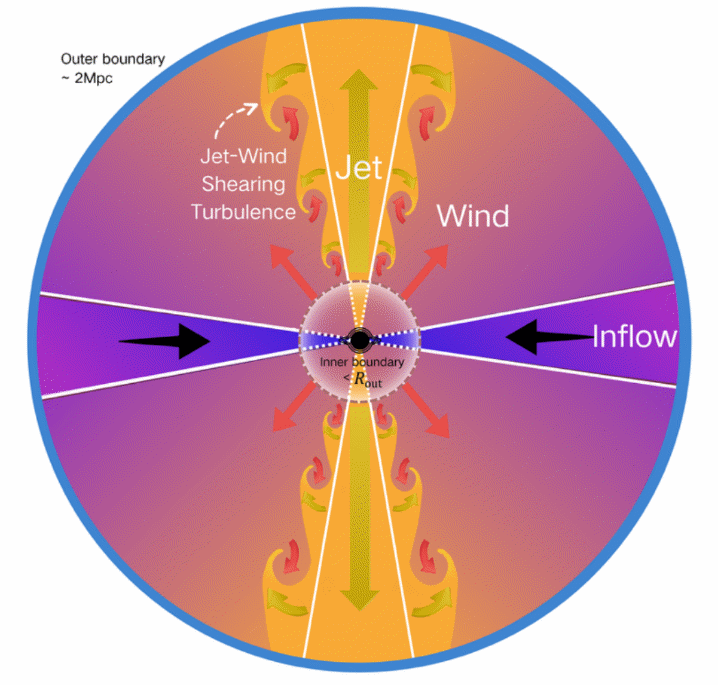 Shanghai Astronomical Observatory Makes Breakthrough in the Galaxy Cluster "Cooling Flow Problem"Jul 04, 2026
-
 Gas Moves Chaotically on Small Scales in Massive Star-Forming RegionsAn international research team led by Chinese scholars, in collaboration with scientists from Finland, the United States, Spain, Chile, Germany, South Korea and other countries, has completed a landmark study using data from the ALMA-ATOMS survey. The findings challenge the long-standing canonical paradigm in astronomy that gravity dominates the small-scale structural evolution of molecular clouds. The research reveals that turbulence may act as the primary driver governing gas kinematics and structural evolution even within sub-parsec supercritical gas filaments adjacent to nascent stars, delivering critical observational evidence for deciphering the dynamical mechanisms at the initial stage of star formation. The corresponding paper has been published in SCIENCE CHINA Physics, Mechanics & Astronomy.Jun 27, 2026
-
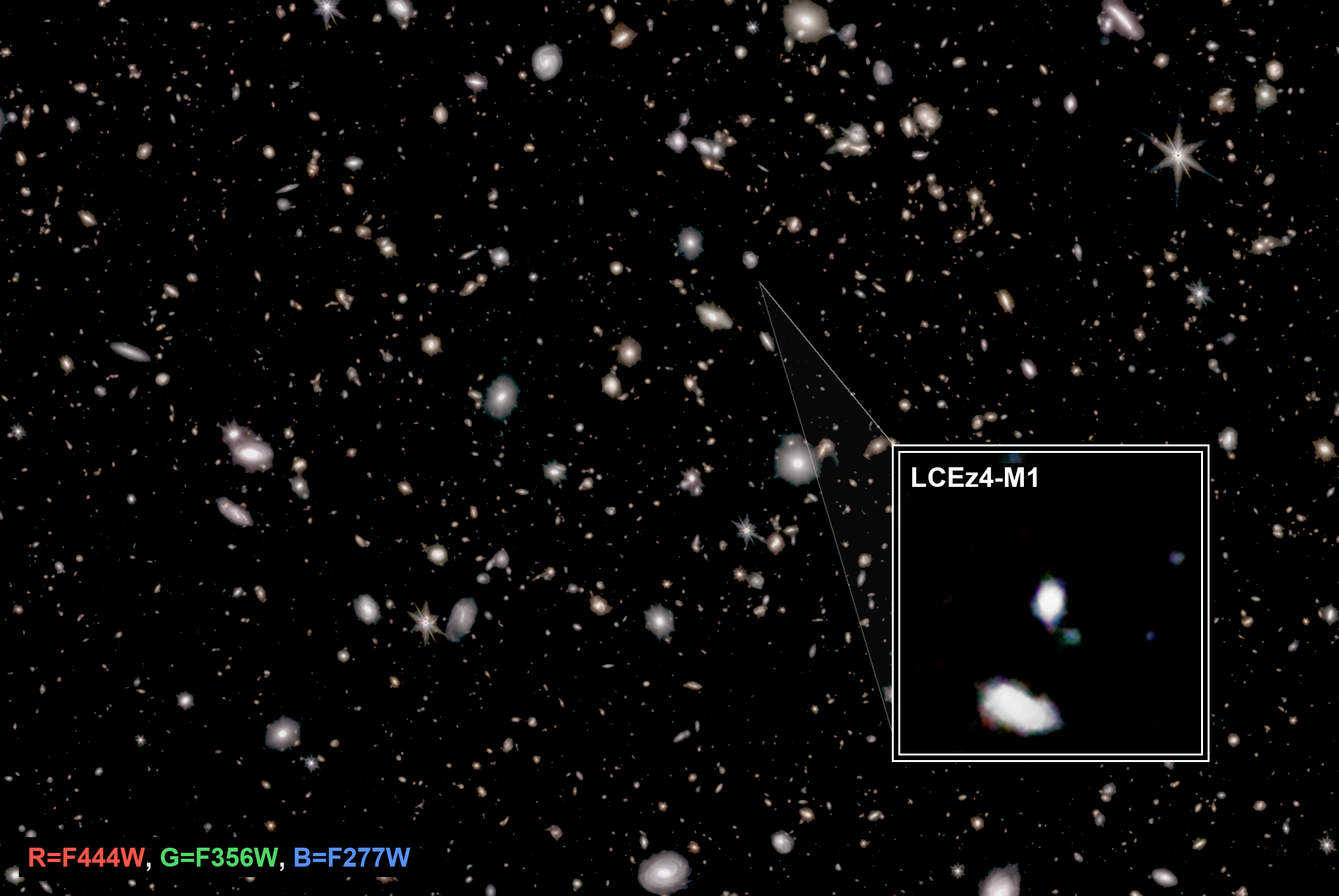 Researchers at Shanghai Astronomical Observatory Led the Discovery of the Most Distant Lyman Continuum Emitting Galaxy Known to DateJun 25, 2026


