In-House Developed Products
Using ARM + GPU as its embedded multicore processing hardware architecture and supporting interfaces including Ethernet, USB and serial ports, the system integrates high-frame-rate camera image acquisition, signal extraction, wavefront phase reconstruction, miniature deformable mirror control, and host-computer communication. Parallel multithreaded algorithms running in a real-time operating system enable high-speed wavefront signal processing and kilohertz closed-loop correction bandwidth, with a user-friendly interface developed across platforms using the Qt graphical framework. Different types and specifications of optoelectronic components, including wavefront sensors, imaging detectors and deformable mirrors, can be selected flexibly to suit application requirements. This solution offers a compact design, high-speed closed-loop operation and flexible configuration, with wide-ranging applications in ophthalmic imaging, space-based optical remote sensing, and field astronomical observation.
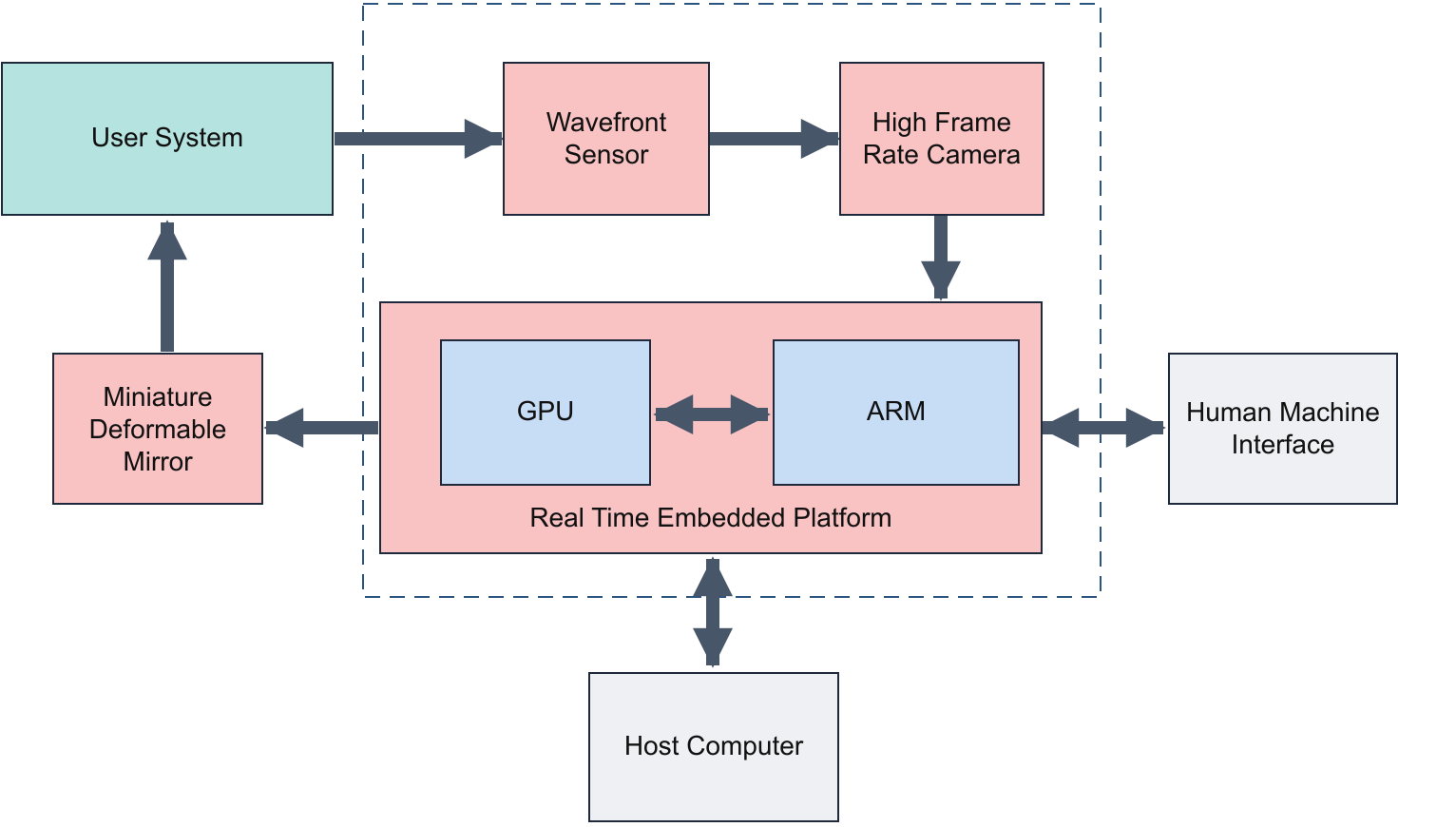
Figure 1 Schematic of the miniature adaptive optics system
Table 1 Example of a miniature adaptive optics system
|
Deformable mirror model |
OKO PDM50-109 piezoelectric deformable mirror |
|
Clear aperture |
≤40 mm |
|
Number of Shack Hartmann wavefront sensor subapertures |
1280 |
|
Embedded platform |
NVIDIA Jetson Nano |
|
Closed loop bandwidth |
≥200 Hz |
|
RMS residual surface error after calibration |
≤1/20 wavelength |
|
Dimensions of the wavefront sensing and processing unit |
25 cm × 18 cm × 20 cm |
|
Human machine interface |
Touchscreen |
|
Operating system and graphical development environment |
Ubuntu 18.04 LTS + Qt5.2 |
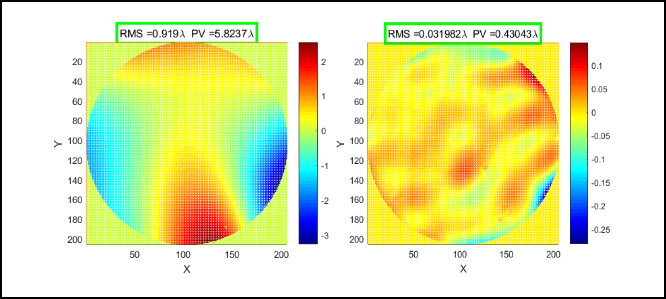
Figure 2 Miniature adaptive optics system correction of wavefront aberrations: (left) before correction; (right) after correction
附件下载: