

Highlights
Sino-French Pro-Am Workshop on Observations of Solar System Phenomena Successfully Held
The Sino-French Pro-Am Workshop on Observations of Solar System Phenomena was held in Shanghai from 31 October to 4 November 2026. The workshop was jointly hosted by the Shanghai Astronomical Observatory (SHAO) , Chinese Academy of Sciences and the Observatoire de Paris, and co-organized by Shanghai University of Engineering Science and the Shanghai Astronomy Museum. It brought togethermore than 70professional astronomers, amateur astronomers, and university students from China, France, and other countries and regions to explore new opportunities for solar system science using small-aperture telescopes and collaborative observation networks, and to promote exchanges and cooperation between the Chinese and French astronomical communities.
The workshop featured Professional-Amateur Collaboration (Pro-Am) as its defining characteristic. It focused on solar system phenomena such as asteroid occultations, natural satellite occultations, and lunar flashes, as well as topics including observational instruments, data processing, artificial intelligence, and the development of observation networks. The program included academic presentations, observation training, practical activities, and thematic discussions.
Zheng Zhenya, Deputy Director of SHAO, and Professor Rachid Malti, Science and Technology Counsellor at the Consulate General of France in Shanghai, attended the opening ceremony and delivered remarks. Both sides reviewed the long-standing cooperation and exchanges between the Chinese and French astronomical communities and expressed their expectation to further promote collaboration between astronomers and public astronomy groups in the two countries. Lin Qing, Director of the Astronomy Research Center at the Shanghai Astronomy Museum, also attended the opening ceremony.
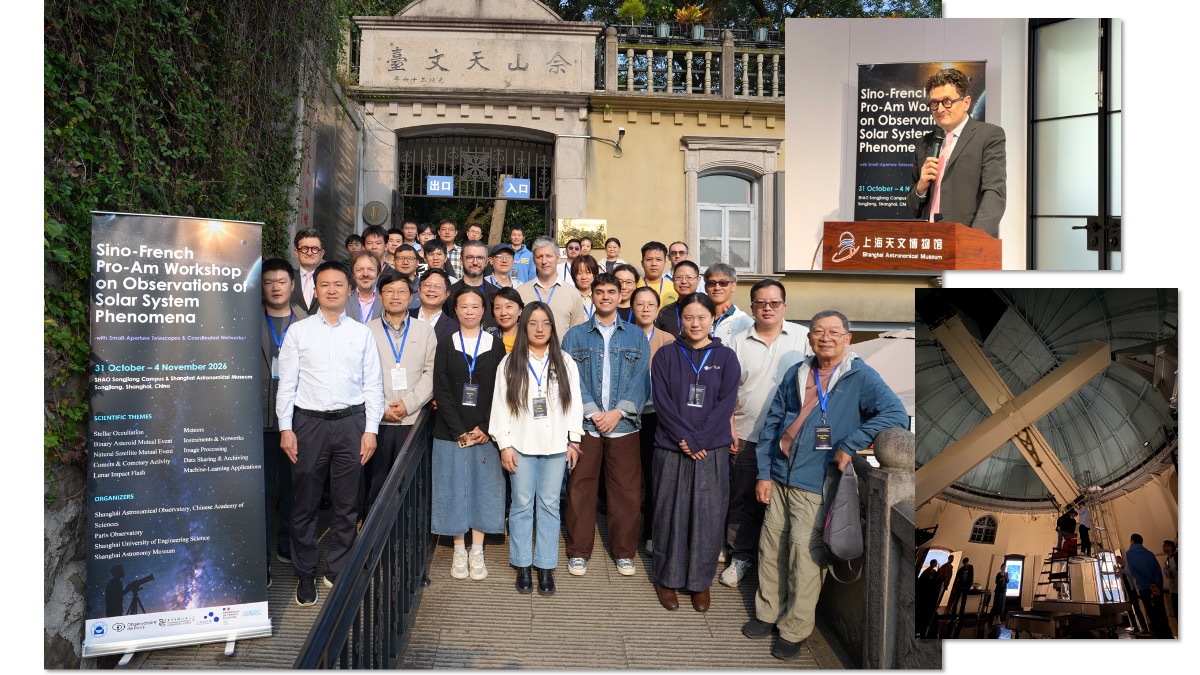
Figure 1. Left: Group photo of the workshop; upper right: Professor Malti, Science and Technology Counsellor at the Consulate General of France in Shanghai, delivering remarks; lower right: Participants experiencing the charm of the century-old Sheshan Observatory.
The Sheshan Observatory (now the Shanghai Astronomy Museum) is an important historical witness to Sino-French astronomical exchange. The 40 cm double refractor at the Sheshan Observatory, built around 1900, was purchased from France and has deep historical ties with the French astronomical community. Choosing the Shanghai Astronomy Museum as the venue for this workshop both continued the tradition of Sino-French astronomical cooperation and provided a new platform for exchange on modern observational techniques and international collaborative networks. Participants also used the 40 cm refractor to conduct visual observations of Saturn and its satellite system, experiencing firsthand the appeal of this historic telescope.
During the workshop, experts including Daniel Hestroffer and Valéry Lainey from the Observatoire de Paris, along with scholars from multiple domestic research institutions and universities, delivered topical presentations on observations and dynamics of solar system bodies. The presentations covered applications of Gaia space astrometry data in solar system research, stellar occultation observations and high-precision astrometry, asteroid binary systems, orbit improvement for natural satellites, applications of artificial intelligence in asteroid shape inversion and planetary image processing, and applications of survey projects in the study of small solar system bodies.
The workshop also included public lectures and training in observation techniques and data analysis specifically for amateur astronomers and students. Participants learned observation methods for solar system phenomena such as occultations, as well as related instrument configurations, data acquisition, and processing techniques. By combining academic exchange with practical observation and data processing, the workshop built a platform for collaboration between professional researchers and amateur observers. More than ten high school students from the Shanghai French School also participated in the activities.
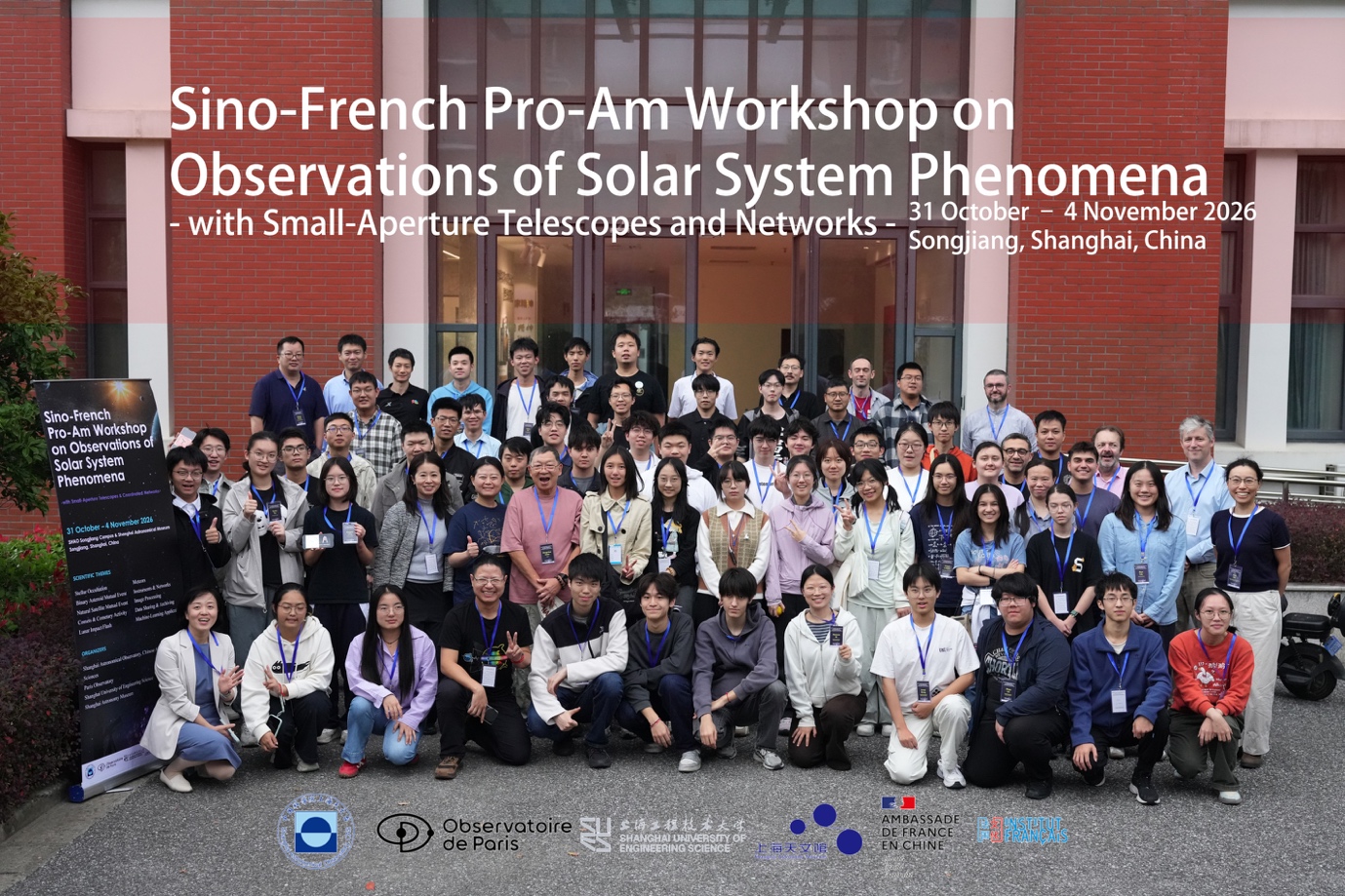
Figure 2. During the workshop, a public event for amateur astronomers was held at the Sheshan Science Campus of SHAO, with active participation from astronomy clubs at several Shanghai universities and teachers and students from the Shanghai French School.
The workshop provided opportunities for face-to-face exchange among Chinese and French professional astronomers, amateur astronomers, and young students, and created conditions for further joint observations of solar system phenomena, sharing of observational data, and development of collaborative observation networks. In the future, SHAO will continue to deepen exchanges with international partners such as the Observatoire de Paris, leverage its strengths in celestial dynamics, small solar system body research, and observational facilities, promote professional-amateur astronomical collaboration, and inject new vitality into solar system science research and international astronomical cooperation.


